
Wood canopy beds are timeless statement pieces that bring both warmth and elegance to a bedroom. Whether you’re drawn to a rustic oak design, a minimalist Scandinavian frame, or an exotic teak masterpiece, choosing the right model involves more than aesthetics alone.
From selecting the ideal wood species to finding the right size and finish, this guide will help you discover the wood canopy bed that perfectly suits your style, budget, and living space.
Bring Timeless Charm to Your Bedroom
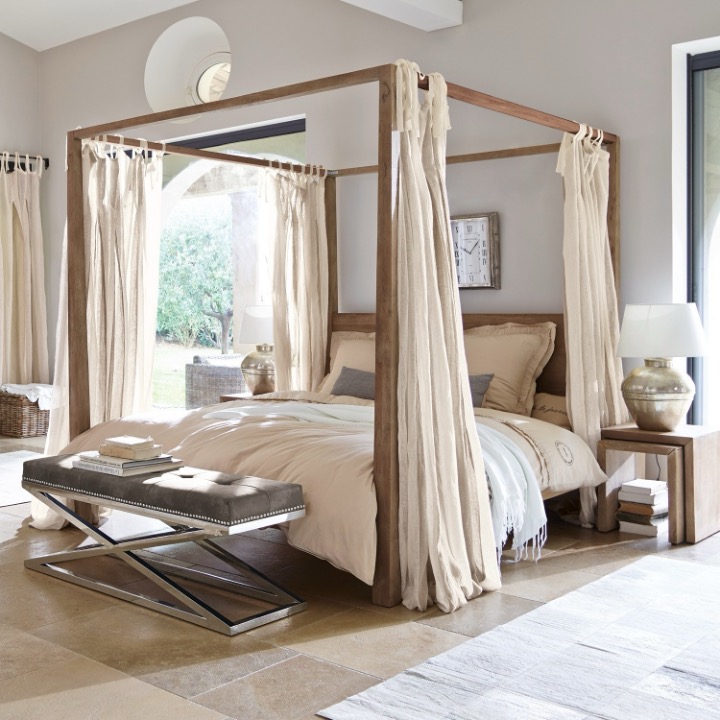
The wood canopy bed is a popular choice in interior design, particularly for bedrooms where creating a warm and intimate atmosphere is a priority.
Unlike traditional beds, a canopy bed features a distinctive structure that allows curtains or drapes to be added, creating a more private and cocooning sleeping space.
But why is wood such a popular material for this type of bed? Several factors explain its enduring appeal.
Why Choose a Wood Canopy Bed?
A wide variety of styles and wood species
From light pine and solid oak to exotic hardwoods, wood offers incredible versatility to suit every taste and budget.
A cosy atmosphere
With its warm tones and natural textures, wood creates a soothing environment ideal for relaxation and rest.
Natural and authentic charm
Wood instantly adds warmth and character to a bedroom. Each species offers unique tones and grain patterns, resulting in a naturally elegant ambiance.
Outstanding durability
Solid wood is sturdy and built to last. A wooden canopy bed is a long-term investment designed to serve you for many years.
A true statement piece
A wood canopy bed naturally draws attention and structures the room, becoming the focal point of your décor.
Timeless style
From rustic to contemporary interiors, wood adapts effortlessly to different aesthetics and never goes out of fashion.
What Bedroom Styles Work Well with a Wood Canopy Bed?
One of the main concerns when purchasing a wooden canopy bed is ensuring it complements your existing décor—unless, of course, you’re buying off-plan with the opportunity to customise your future home from the start.
Because a canopy bed is a substantial piece of furniture that can easily dominate a room, it’s important to consider how it integrates with the rest of your design scheme.
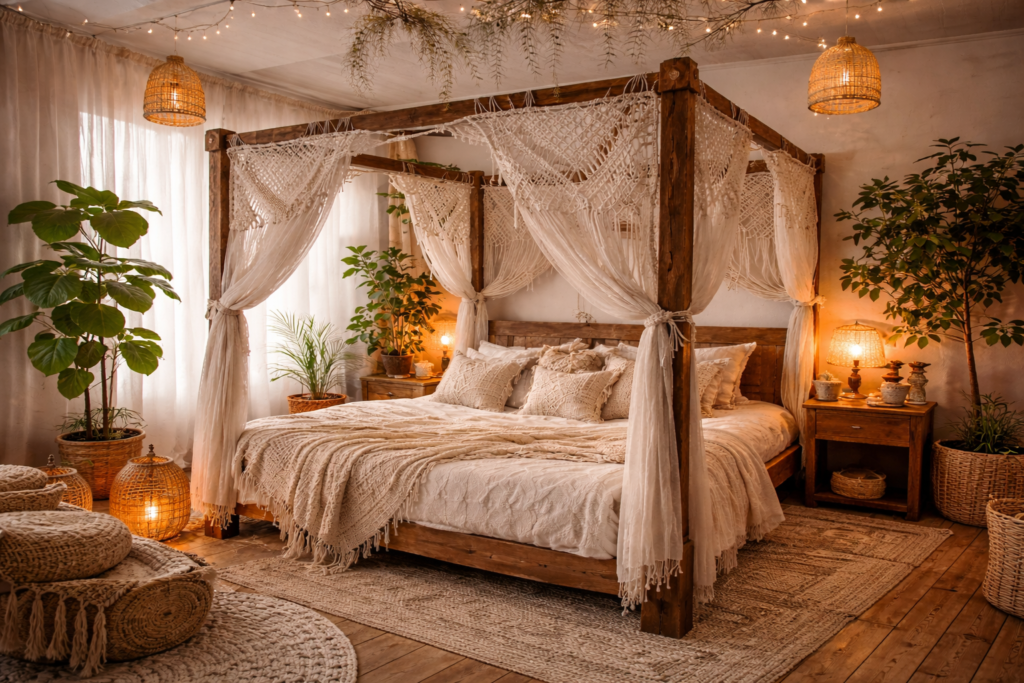
Bohemian Style
Choose a canopy bed made from raw wood, bamboo, or a slightly textured species such as mango wood.
Add sheer curtains, macramé details, or natural textiles to enhance the atmosphere.
This style favours organic materials, neutral tones, and soft layering, creating a bedroom that feels warm, calming, and full of character.
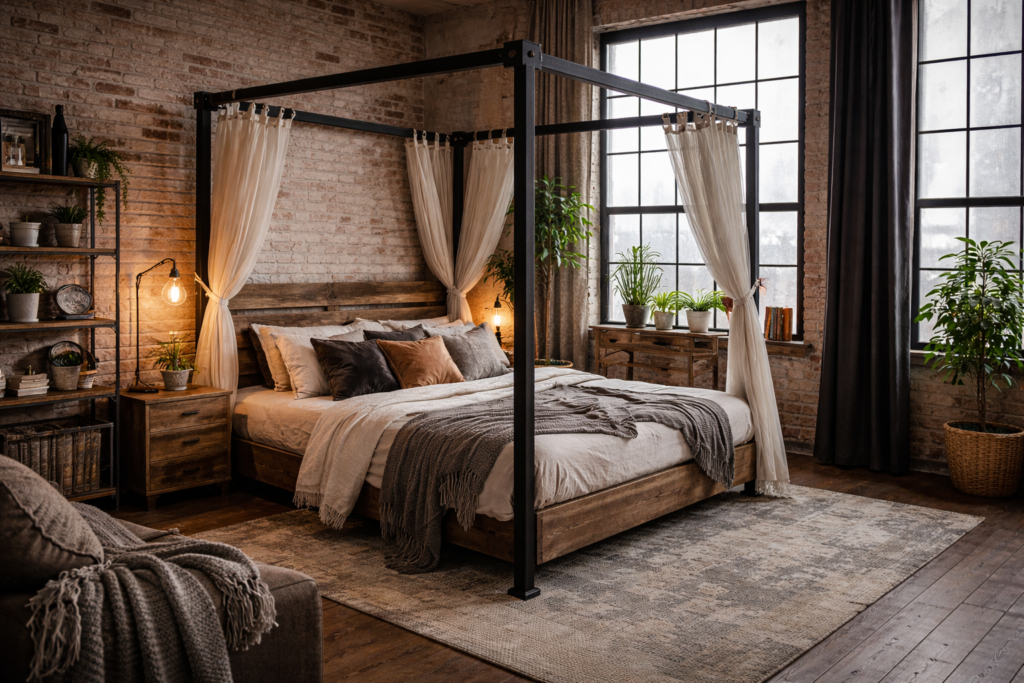
Industrial Style
For an industrial look, combine wood with metal elements such as a black frame or steel accessories.
A dark wood or acacia canopy bed works particularly well in this type of setting.
Complete the design with raw materials such as linen, leather, and metal, alongside a restrained colour palette to recreate a loft-inspired ambiance that feels both modern and welcoming.
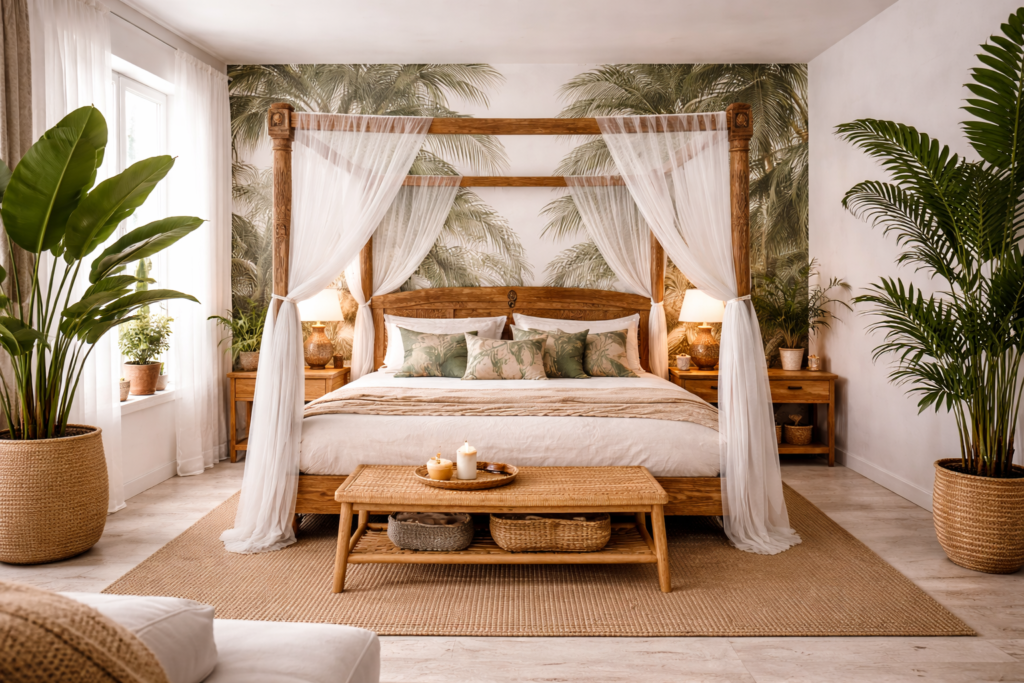
Tropical or Ethnic Style
Exotic woods such as teak, mango, or mahogany are ideal for this style.
Pair your canopy bed with indoor plants, natural-fibre textiles, and warm colours to create an escape-inspired atmosphere.
This type of décor evokes travel and faraway landscapes while bringing a sense of relaxation and serenity into the bedroom.
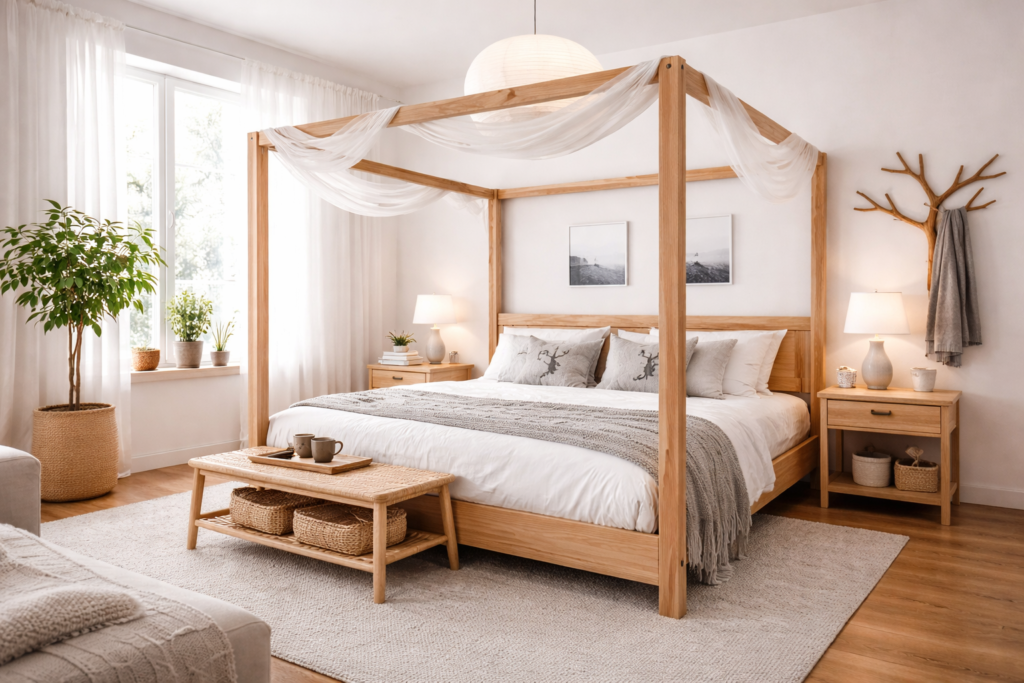
Scandinavian Style
Opt for a canopy bed crafted from pine, beech, or light oak, featuring simple lines and a natural or slightly satin finish.
Pair it with cotton bedding, wool throws, and touches of light wood to enhance brightness.
The goal is to create a clean, functional, and cosy space where every element has its place without overwhelming the room.
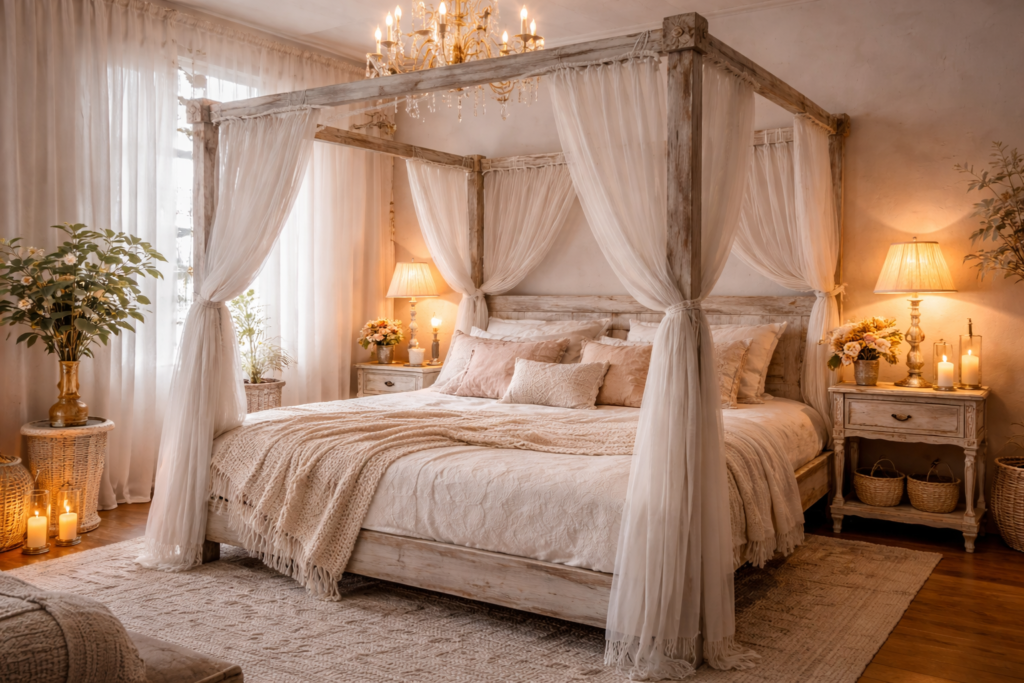
Romantic Style
Choose a bed with a distressed, whitewashed, or gently aged finish to add charm and softness.
Complete the look with flowing curtains or delicate sheers that soften the canopy structure.
Pastel shades, soft fabrics, and ambient lighting contribute to an intimate and elegant cocooning atmosphere.
What Type of Wood Should You Choose for Your Canopy Bed?
The choice of wood is essential, as it affects the appearance, durability, and price of the bed. Here are some of the most commonly used wood species:
Oak
Renowned for its strength and longevity, oak is a premium choice. Its beautiful natural tones and distinctive grain add undeniable character. Oak is ideal for traditional or rustic interiors.
Pine
More affordable, pine is lightweight and easy to work with. Although less durable than oak, it offers attractive light tones and is perfectly suited to Scandinavian or bohemian settings.
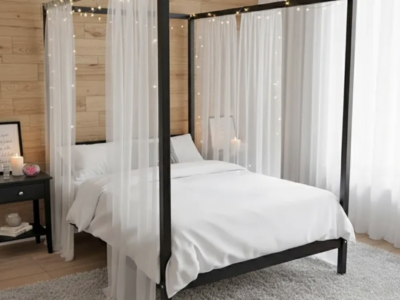
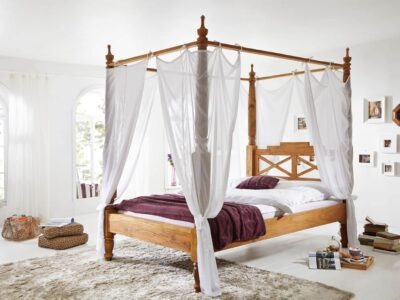
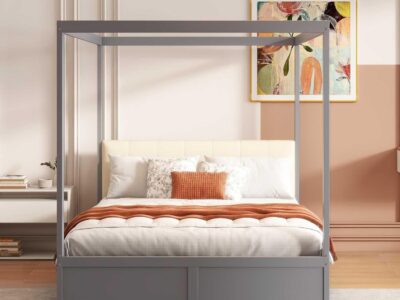

Teak and Exotic Woods
These woods naturally resist humidity and bring an exotic touch to the bedroom. They are ideal for tropical or ethnic-inspired interiors but are generally more expensive.
Bamboo
Although technically a grass, bamboo is frequently used in canopy bed construction thanks to its durability and natural aesthetic. It is perfect for creating an eco-friendly or Zen-inspired look.
Tip: If you’re working with a limited budget, consider pine or high-quality engineered wood. For a long-lasting investment, choose durable species such as oak or teak.
Other Wood Species Used for Canopy Beds
Acacia
A dense and resilient wood with beautiful tonal variations. Highly durable, it is suitable for both indoor and semi-outdoor environments.
Ideal for: a natural look with strong character
Rubberwood
An eco-friendly wood sourced from sustainable plantations. Its uniform light colour makes it an excellent alternative to oak at a more affordable price.
Ideal for: responsible and nature-inspired interiors
Mango Wood
An exotic hardwood with pronounced grain patterns, often used in handcrafted furniture. It brings personality and uniqueness to a space.
Ideal for: bohemian or ethnic styles
Beech
A light-coloured wood that is both strong and visually understated. Widely used in furniture making, it offers a good balance between aesthetics and durability.
Ideal for: Scandinavian or contemporary interiors
Ash
Similar to oak but lighter in colour, ash features elegant grain patterns that bring brightness and sophistication.
Ideal for: modern and minimalist interiors
Mahogany
A premium hardwood with deep, rich tones. Highly elegant, it is often associated with classic or colonial-inspired spaces.
Ideal for: chic and refined bedrooms
Rosewood
A luxurious exotic hardwood that is dense, decorative, and visually striking thanks to its dramatic grain patterns.
Ideal for: high-end and exotic interiors
Comparing Different Wood Types
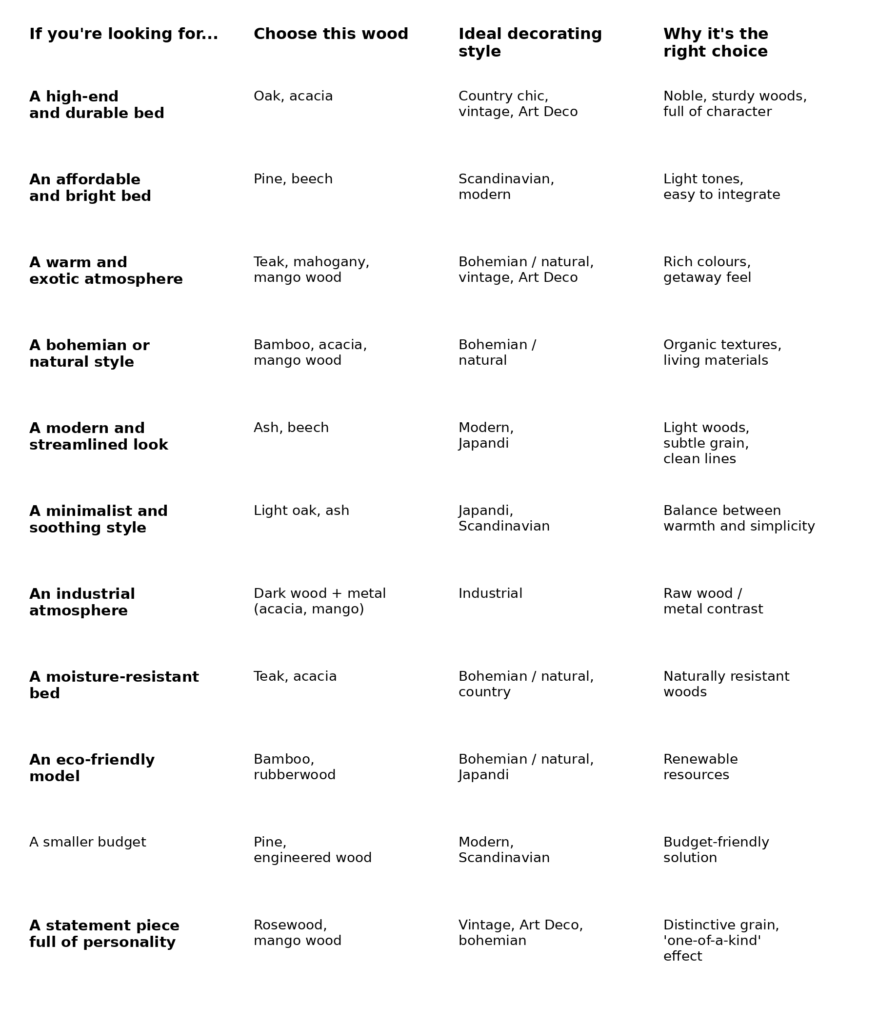
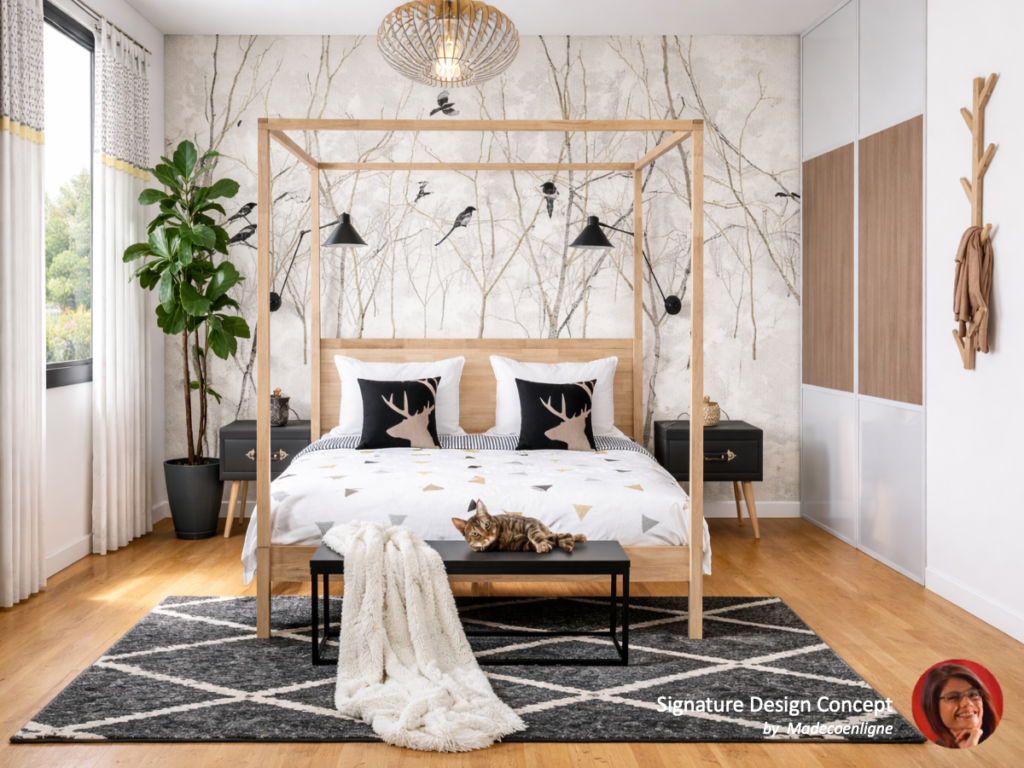
To simplify your decision:
- Light woods → Scandinavian, modern, Japandi styles
- Dark woods → Vintage, Art Deco, industrial styles
- Textured or exotic woods → Bohemian and nature-inspired styles
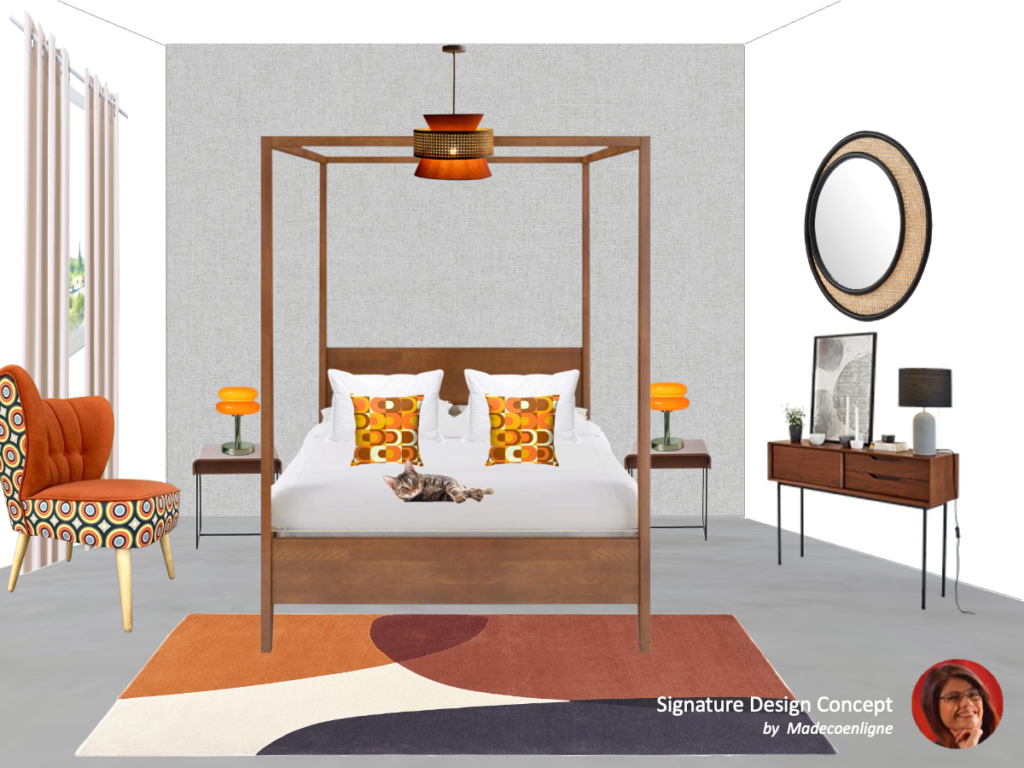
If you’re still unsure:
- Choose a light wood to make a room feel larger and brighter.
- Choose a dark wood to create a warmer and more intimate atmosphere.
What Finish Should You Choose?
The finish plays an important role in the final appearance of your canopy bed.
Varnished Wood
Varnish protects the wood while giving it a glossy or satin sheen. This finish is ideal for a sophisticated look and suits classic or vintage interiors.
Waxed Wood
Wax provides a softer, more natural matte appearance while protecting the surface. It is commonly associated with rustic or country-chic styles.
Raw Wood
Leaving wood untreated highlights its natural texture and character. This option is perfect for minimalist, Scandinavian, or bohemian settings.
Painted or Distressed Finishes
Some canopy beds feature painted or distressed finishes for a shabby chic or romantic aesthetic. Soft pastel shades and aged white tones are especially popular.
Tip: Choose a finish that complements the overall style of your bedroom. Raw wood pairs beautifully with minimalist décor, while varnished wood integrates seamlessly into more traditional interiors.
What Size Wood Canopy Bed Should You Choose?
Size: Adapting Your Canopy Bed to the Dimensions of Your Bedroom
Wood canopy beds come in different sizes — single, double, queen, and king — and choosing the right dimensions is essential to create a harmonious bedroom layout.
Single / Twin Bed
Single / twin bed (90 × 190 cm): ideal for a child’s bedroom or a guest room, a single wood canopy bed is perfect for smaller spaces. It adds charm and originality without overwhelming the room.
Double Bed
Double bed (140 × 190 cm): suitable for medium-sized bedrooms, this format offers a good balance between comfort and space. It is an excellent option for an adult bedroom or a small apartment.
Queen Size Bed
Queen size bed (160 × 200 cm): recommended for spacious bedrooms, a queen-size canopy bed helps create a true cocoon. With a wooden canopy frame, it becomes the centrepiece of a comfortable and elegant bedroom.
King Size Bed
King size bed (180 × 200 cm or larger): best suited to large bedrooms, a king-size wood canopy bed brings a real sense of luxury. In this format, the wooden canopy structure creates a strong visual presence and offers optimal comfort.
Tips
Measure your bedroom before choosing the size of your canopy bed, and make sure you leave enough space around the bed for other furniture and easy circulation.
For optimal comfort, choose a 160 × 200 cm bed if your space allows it.
Where to Buy a Wood Canopy Bed?
Today, there are many ways to buy a wood canopy bed, whether you are looking for an affordable model or a high-end piece. Major furniture retailers and specialist websites offer a wide range of beds in different wood species — pine, oak, mango wood and more — and styles, from minimalist to highly decorative.
Online
Online shopping gives you access to the widest selection and often the best prices. Marketplaces and specialist retailers make it easy to compare models, dimensions, materials, and customer reviews before purchasing.










Furniture Stores, Antique Dealers, Flea Markets or Craftsmen
In store, you can see the bed in real-life conditions, test its sturdiness, and assess the finishes. This can be reassuring, especially for such a structuring piece of furniture in a bedroom.
From a craftsman or specialist furniture maker, you can access unique or custom-made models, often crafted from solid wood. This is the ideal option if you are looking for a durable, high-end canopy bed that is perfectly adapted to your space.
Antique dealers and flea markets may sometimes offer antique canopy beds, château-style beds, or characterful pieces that cannot be found through traditional retail channels. This is an excellent option if you are looking for a unique model with a story, which you can restore or integrate into a décor combining old and contemporary elements.
Tip: whatever channel you choose, always check the type of wood — solid or engineered — the quality of construction, and the dimensions before finalising your purchase.
How to Maintain a Wood Canopy Bed
A wood canopy bed is a durable piece of furniture, but proper maintenance will help preserve both its appearance and structural strength over time.
Everyday Maintenance
Regular dusting with a soft cloth is usually enough to prevent dust from building up, especially on the posts and upper structure, which are often forgotten.
Cleaning the Wood
Use a slightly damp cloth — never a soaking wet one.
Avoid harsh or abrasive products.
Choose gentle natural products such as diluted black soap or a very light white vinegar solution.
Protection According to the Finish
Varnished wood: easy to maintain and less sensitive to stains.
Waxed wood: requires a new layer of wax once or twice a year.
Raw wood: more delicate and should ideally be oiled for protection.
Pay Attention to the Environment
Wood is sensitive to:
- excessive humidity
- temperature variations
- prolonged exposure to sunlight
Tip: avoid placing your wood canopy bed next to a radiator or a highly exposed window.
How to Assemble a Wood Canopy Bed
Assembling a canopy bed requires a little more care than assembling a standard bed.
Check the Available Space
A canopy bed requires:
- enough floor space
- enough height clearance — ideally 220 to 240 cm minimum ceiling height
Assemble the Structure
Start by assembling the bed base.
Then attach the vertical posts.
Finish with the upper canopy frame.
👉 Always assemble the bed with two people: the posts can be heavy and unstable when handled alone.
Stability and Safety
Make sure all screws are properly tightened.
Check that the bed is perfectly level and upright.
On some models, wall fixing may be recommended.
Adding Curtains or Sheers
Choose lightweight fabrics so you do not overload the structure.
Check that the curtains are compatible with the canopy rails or bars.
Final Thoughts
Choosing a wood canopy bed is not simply about selecting a beautiful piece of furniture. It involves considering size, wood type, finish, and compatibility with your existing décor. Depending on your taste, budget, and bedroom size, a wood canopy bed can become the true centrepiece of your room, transforming it into an elegant and welcoming retreat.
Wood canopy beds also tend to perform well on the second-hand market, especially when made from solid wood. Their timeless style and sturdy construction make them easier to resell than many other types of beds, making them a reassuring long-term investment.
FAQ
Still have questions? Here are answers to the most common ones.
Is a wood canopy bed suitable for small bedrooms?
Yes, provided you choose a visually light model — such as light wood with a slim frame — and a suitable size, such as 90 cm or 140 cm wide.
Is wood stronger than metal?
In terms of overall durability, yes, especially when it comes to solid wood. Wood absorbs impact better and generally ages more gracefully.
Can you use a canopy bed without curtains?
Absolutely. More and more models are used without curtains for a minimalist and contemporary look.
Does wood crack over time?
Like any natural material, wood may move slightly over time, but good construction and proper assembly greatly reduce this issue.